Physical Security Hurricane Preparedness for Business: The 2026 Miami Guide
When your cameras go dark mid-storm, your business becomes a black box. Here is how Miami businesses harden cameras, cloud access control, and battery backups to keep visibility and control even after evacuating…
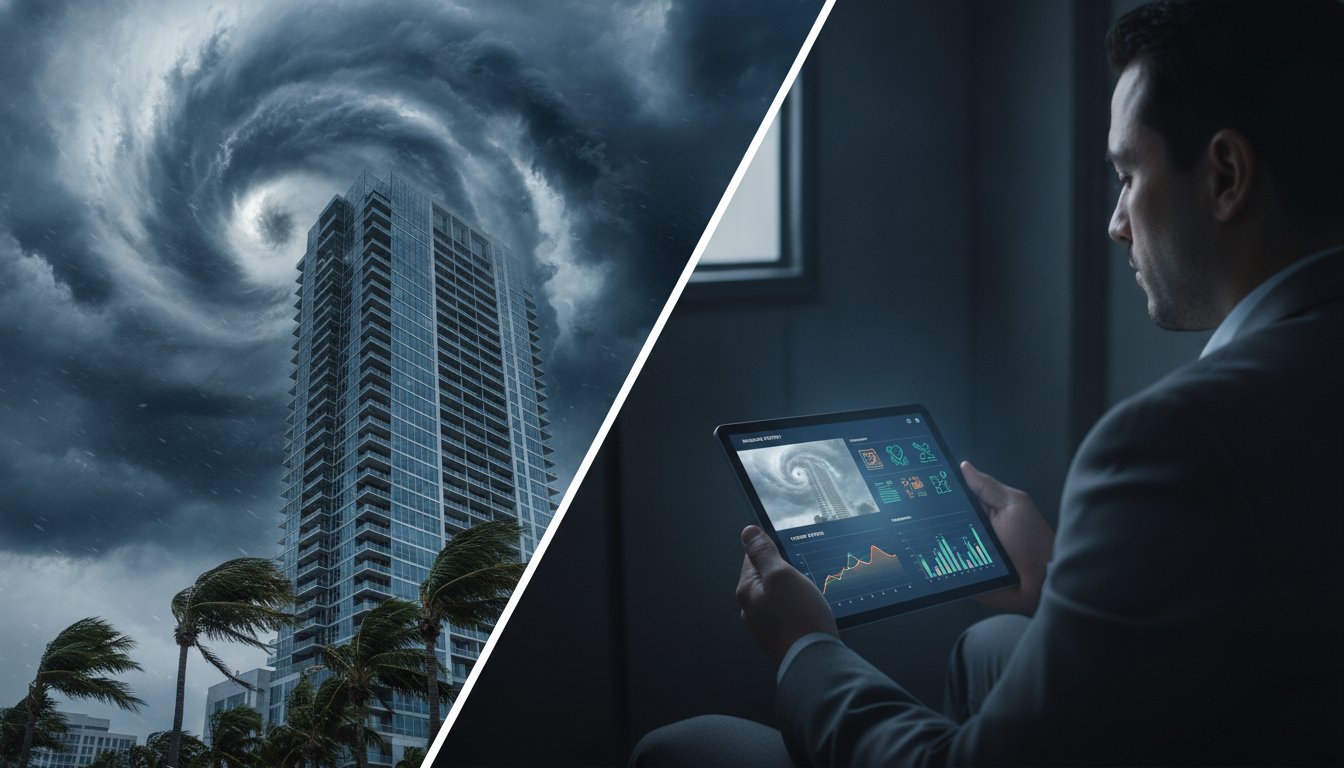
For Miami business owners and facility managers, hurricane season is more than just a weather forecast—it's a recurring operational threat. While data backups and cloud infrastructure are common talking points, the physical security of your premises during and after a storm is a critical component of resilience that is often overlooked. In South Florida, true physical security hurricane preparedness for business isn't just about surviving the wind; it's about maintaining remote visibility and intelligent access control when you can't be on-site. This guide provides an engineering-focused approach to hardening your security infrastructure for the 2026 hurricane season, so you can protect your assets even when evacuated.
Learn how to harden your physical security infrastructure to maintain visibility and access control during South Florida's most severe weather events.
Table of Contents
- Why Hurricane Preparedness for Physical Security is Non-Negotiable in Miami
- Hardening Your Security Hardware: Ratings, Placement, and Enclosures
- Cloud-Managed Access Control: Maintaining Security During Evacuations
- The 5-Step Physical Security Hurricane Readiness Checklist
- RANGO Technologies: Your Local Partner for Hurricane-Hardened Security
Why Hurricane Preparedness for Physical Security is Non-Negotiable in Miami
Losing power and internet connectivity during a hurricane creates a dangerous information vacuum. When your cameras go dark and your access logs stop updating, your business becomes a black box. This "blindness" isn't just an inconvenience; it's a significant liability that exposes your assets to risks that persist long after the storm has passed.
- The High Cost of 'Blindness': Without active camera feeds, you have no way to monitor for damage, flooding, or unauthorized access. This lack of visibility can complicate insurance claims and delay recovery efforts, as you cannot visually assess the property to dispatch the right cleanup or repair crews.
- Post-Storm Vulnerabilities: The 48-hour window immediately following a major hurricane is a period of heightened risk. Local law enforcement is often overwhelmed with emergency response, creating opportunities for theft and looting in commercial districts. A visibly functional security system is a powerful deterrent.
- Insurance Requirements: Many commercial property insurance policies require businesses to demonstrate due diligence in securing their premises. A documented physical security plan, complete with hardware hardening and power redundancy tests, can be crucial in supporting insurance claims.
- Operational Continuity: A resilient access control system means that once authorities give the "all clear," your team, emergency responders, or restoration crews can enter the building safely and efficiently, accelerating your return to normal operations.
The Local Miami Risk Profile
Generic national guides fail to address the specific environmental challenges of South Florida. Preparing your security hardware for a Miami hurricane means engineering for a unique combination of threats that go beyond high winds. Miami-Dade County's hurricane guidance is a useful baseline, but your hardware plan has to go further.
- Flood Zones vs. Wind-Driven Rain: It's critical to know whether your primary threat is storm surge or intense rainfall. Hardware in a designated flood zone requires elevated placement and different waterproofing strategies than hardware exposed to sustained wind-driven rain.
- The Role of Humidity and Salt-Air Corrosion: The subtropical climate in Miami is relentlessly corrosive. Salt in the air accelerates the degradation of metal mounts, enclosures, and electronic contacts. Standard steel hardware can rust and fail in a single season, making stainless steel or specialized coated materials a necessity.
- Why 'Standard' IT Support Isn't Enough: A typical IT provider manages servers and software. They are not trained in the physics of mounting a camera to withstand extreme wind loads or the electrical engineering required for redundant power to door locks. Physical security hardening is a specialized discipline that bridges IT, electrical, and construction knowledge.
Beyond Data: Protecting the Physical Perimeter
Your digital disaster recovery plan is only half the battle. If your server is backed up to the cloud but the building itself is compromised, your business is still at a standstill. Integrating physical security into your core disaster recovery strategy is essential for holistic protection.
- Why Your Digital Plan is Incomplete: Data is invaluable, but so are physical assets like medical equipment, inventory, and critical infrastructure. Protecting the building perimeter is the first line of defense for everything inside it.
- The Psychological Benefit of Remote Visibility: For business owners who have evacuated, the ability to pull up a live camera feed on their phone provides immense peace of mind. It allows you to monitor conditions in real-time and make informed decisions from a safe distance.
Hardening Your Security Hardware: Ratings, Placement, and Enclosures
The resilience of your physical security system is determined by the durability of its most exposed components: the cameras and their connections. Simply installing a camera is not enough; it must be deployed with hurricane-force conditions in mind.
- Understanding IP Ratings: Ingress Protection (IP) ratings define how well a device is sealed against dust and water. For Miami businesses, a rating of IP66 (protection against powerful jets of water) or IP67 (protection against temporary immersion) is a strong benchmark for any hardware directly exposed to the elements.
- Dome vs. Bullet Cameras: While both have their place, dome cameras generally offer a more aerodynamic profile, making them less susceptible to being torn away by 100+ mph winds. Bullet cameras, if used, require robust, short mounting arms to minimize vibration and wind load.
- The Importance of Conduit Sealing: Water's most insidious entry point is often through cabling conduits. If not properly sealed with duct seal or silicone, wind-driven rain can travel down the cables and flood your server room or network closet, destroying equipment far from the initial breach.
- Ubiquiti G5 Series and AI Pro: Ubiquiti's professional camera lines are engineered for durability. While models like the G5 Bullet (IP55) and AI Professional (IP65) are highly weather-resistant, their placement is key. For the most exposed locations, placing them under eaves or within a weatherproof or higher-IP enclosure provides an essential extra layer of defense against direct, sustained impact from wind-driven rain.
Weather-Rated Camera Deployment
Strategic placement and mounting are just as important as the hardware itself. A high-end camera mounted with cheap hardware is a likely point of failure.
- Optimal Mounting Heights: Mount cameras high enough to be out of reach and avoid low-level flying debris, but not so high that their view is obscured by rooflines or awnings. A height of 10-15 feet is often a good balance for commercial properties.
- Using Stainless Steel Mounting Hardware: Always replace the manufacturer-provided screws with high-grade stainless steel alternatives. This small investment keeps salt-air rust from weakening the mount and causing a catastrophic failure during a storm.
- The Value of 'Vandal-Resistant' IK10 Ratings: An IK rating measures impact resistance. An IK10-rated camera can withstand a significant blow, making it more likely to survive impacts from flying debris—a common occurrence during a hurricane.
Protecting the Network Core
The outdoor hardware is only half of the system. The indoor equipment that records and powers your cameras must be equally protected from storm-related threats like flooding and power surges—a core part of professional network administration.
- Elevated and Climate-Controlled Racks: House your Network Video Recorder (NVR) and network switches in a secure rack that is elevated off the floor. The ideal location is an interior room with no windows, well above any potential flood line.
- The Role of Surge Protection for Outdoor PoE Runs: Power over Ethernet (PoE) cables running to outdoor cameras are highly susceptible to lightning-induced surges. Installing an Ethernet surge protector on these lines before they connect to your network switch can keep a strike from destroying your entire network core.
- The difference between IP66 and IP67 for outdoor business hardware is that an IP66-rated device can withstand powerful jets of water from any direction, while an IP67-rated device can be fully submerged in up to one meter of water for 30 minutes.
Cloud-Managed Access Control: Maintaining Security During Evacuations
When you evacuate, how do you control who can and cannot enter your facility? Traditional keys are a liability, and on-premise server-based systems are useless without local power and networking. This is where cloud-managed access control becomes a mission-critical tool for hurricane readiness.
- Why Brivo Cloud Access Control is Superior: An on-premise access control server is a single point of failure. If it loses power or is damaged by water, your entire system goes down. Brivo's cloud-based architecture means the "brain" of your system is safe in a secure data center, accessible from anywhere with an internet connection.
- Managing Site Access Remotely: With a system like Brivo, you can grant or revoke access to emergency responders, insurance adjusters, or cleanup crews directly from your smartphone, no matter where you have evacuated.
- Fail-Safe vs. Fail-Secure: This is a critical engineering decision. "Fail-Secure" systems remain locked when power is lost, which is ideal for securing perimeters. "Fail-Safe" systems unlock, which is required for certain fire-rated life-safety exits. Understanding this trade-off and configuring each door correctly is fundamental to hurricane preparedness.
- The Vulnerability of Traditional Keys: In a post-storm scenario, keys can be lost, and it's impossible to know who might have a copy. A compromised master key can render your entire facility vulnerable at the worst possible time.
Brivo and Mobile Credentials
Modern access control systems leverage mobile technology to enhance security and flexibility, which is especially valuable during the chaos of a storm.
- Removing the 'Physical Key' Risk: By using mobile credentials (unlocking doors with a smartphone app), you remove the risk of physical keys being lost or stolen during an evacuation. Access can be revoked instantly from the cloud.
- Cloud-Based Audit Trails: After the storm, Brivo's cloud-based logs provide an immutable audit trail of every door access event. You will know exactly who entered the building and when, which is invaluable for security and insurance purposes.
- Integration with Mobile Alerts: A cloud system can send you real-time push notifications for critical events, such as a "Door Forced Open" or "Door Held Ajar" alert, which could indicate a breach or damage from high winds.
Power Redundancy for Door Locks
Your cloud-based system is only as good as its power source. The door controllers, locks, and network bridge must all have a reliable battery backup to function during a grid outage.
- Calculating Battery Backup Requirements: The power draw of magnetic locks (mag-locks) is significantly different from that of electric strikes. A proper calculation must be performed to confirm your battery backup can sustain the locks in their desired state (locked or unlocked) for the duration of a typical outage.
- The Role of Altronix Power Supplies: Professional-grade, UL-listed power supplies from brands like Altronix are essential. These units are designed for access control applications and include built-in battery charging and seamless failover capabilities.
- Keeping Your Cloud-Bridge Online: The device connecting your on-site hardware to the cloud must have both a UPS and a secondary internet connection. Many businesses opt for a dedicated cellular failover device, an optional but powerful feature that keeps your access control manageable even if your primary ISP goes down.
The 5-Step Physical Security Hurricane Readiness Checklist
Before a storm is on the horizon, use this checklist to audit and harden your systems. This proactive approach—in line with Ready.gov hurricane preparedness guidance—is far more effective than scrambling when a hurricane watch is issued.
- Conduct a Visual Audit: Walk the perimeter of your property. Physically inspect all outdoor camera mounts, junction boxes, and enclosures. Tighten any loose hardware and look for signs of rust or water intrusion that need to be addressed.
- Test UPS Batteries: An Uninterruptible Power Supply (UPS) battery has a finite lifespan, typically 3-5 years. Perform a load test on the UPS units powering your security infrastructure. Unplug them from the wall and record the actual runtime to confirm it meets your requirements.
- Verify Cloud Connectivity and Permissions: Log in to your Brivo and camera management platforms from an off-site location. Confirm your credentials work and that all key personnel who need remote access have the correct, up-to-date permissions.
- Clean and Seal: Clean all outdoor camera lenses and domes for clear visibility. Check the rubber gaskets and seals on all weatherproof enclosures to confirm they are intact and not cracked or degraded from sun exposure.
- Backup Local NVR Footage: If you use a local NVR for continuous recording, back up any critical footage to a cloud backup location before the storm makes landfall. This protects your evidentiary data in case the on-site recorder is damaged.
Testing Your Power Resilience
A theoretical plan is not enough. You must simulate a power failure to truly understand how your system will behave.
- Perform a 'Pull the Plug' Test: This is the most reliable way to be certain. During a scheduled maintenance window, shut off the circuit breakers that power your cameras, NVR, access control panels, and network switches. Watch what happens. Do the cameras stay online? Do the doors remain secure? This test will reveal any weaknesses in your UPS and battery backup strategy.
- The Importance of Dedicated UPS: Your critical security hardware should be on its own dedicated UPS, separate from general office PCs or servers. This keeps a non-essential device from draining the battery capacity needed to keep your cameras and locks operational.
- The ideal runtime for a security UPS in Miami should be engineered to last a minimum of 4-6 hours, covering the initial outage and allowing time for a generator to stabilize, with longer durations required for facilities without generator backup.
Remote Visibility Audit
Remote access is your lifeline during an evacuation. Confirm it's reliable and unobstructed.
- Check for Potential Obstructions: Look at your camera angles with high winds in mind. Are there large trees, flags, or banners that could sway into the field of view and trigger false motion alerts or completely block the camera?
- Update and Save Credentials: Make sure the mobile app for your camera and access control systems is updated on your phone. Save your login credentials in a password manager so you are not trying to remember them during a stressful evacuation.
RANGO Technologies: Your Local Partner for Hurricane-Hardened Security
When a hurricane hits, having a technology partner who is 1,000 miles away is a recipe for extended downtime. Recovery requires a physical presence. A local provider of managed IT services with deep expertise in physical security is a critical asset for Miami businesses.
- Why a Local Miami MSP is Critical: After a storm, you need engineers who can physically get to your location to repair a dislodged camera or troubleshoot a water-damaged access panel. RANGO's local team is on the ground, ready to respond.
- RANGO's Approach: We take an engineering-first approach to every deployment. We don't just sell hardware; we design and build resilient systems specifically for the South Florida climate, specializing in robust Brivo and Ubiquiti integrations.
- Flat-Rate Managed Security: Our managed service agreements put proactive support on a predictable, flat-rate monthly model; onboarding, projects, and hardware are quoted separately. Higher-tier and VIP plans include 24/7 tech support, and paid after-hours emergency support is available to any business.
- Local On-Site Response: Our local presence means a Miami Lakes engineer can follow through on site. Our service commitment: 15-minute remote acknowledgement for critical incidents, 24/7, for managed-service clients; on-site response typically under 4 hours in Miami-Dade during business hours.
The RANGO Difference in South Florida
We are not just a vendor; we are part of the Miami business community. We understand the local challenges because we face them, too.
- Local Engineers, Local Knowledge: Our engineers live and work in the same environment as your business. They have firsthand experience with the effects of salt air, humidity, and severe weather on technology infrastructure.
- Experience with High-Security Environments: We have a proven track record of designing and managing physical security for demanding environments, including medical facilities with HIPAA-aligned IT environments and other high-stakes commercial offices.
- Our Commitment to 24/7 Remote Monitoring: We proactively watch your systems around the clock—24/7 remote monitoring backed by local Miami Lakes engineers—often identifying and resolving issues with power or connectivity before you are even aware of a problem.
Get a Physical Security Audit Before the Storm
The best time to find a vulnerability is before a hurricane does it for you. A proactive audit can reveal hidden risks in your power, mounting, and network infrastructure that could lead to a total system failure during a storm.
- Don't Wait for a Warning: Once a tropical storm warning is issued, it's too late to order and install new hardware or properly re-engineer your power systems. The time to prepare is now.
- Customized Hardening Plans: We create tailored security hardening plans for medical, dental, and commercial offices, addressing the unique risks and compliance requirements of your industry.
Frequently Asked Questions (FAQs)
Will my security cameras work during a power outage? They will only work if the cameras, the network switch they connect to, and the video recorder (NVR/DVR) are all connected to a functional Uninterruptible Power Supply (UPS) or a generator. Without a battery backup, they will go offline the moment the power cuts out.
Is Brivo access control safe to use during a hurricane? Yes, it's one of the safest options. Because Brivo is cloud-based, the core system remains operational in secure data centers, unaffected by local power outages. As long as your on-site door controllers have battery backup, you can manage access remotely from anywhere.
What is the best weather-rating for outdoor security cameras in Miami? An IP rating of IP66 is a strong baseline for hardware in highly exposed locations, as it protects against powerful jets of water. However, many excellent, weather-resistant cameras like the Ubiquiti G5 Bullet (rated IP55) or AI Pro (IP65) perform exceptionally well when installed correctly, such as under an eave or with proper drip loops to protect connections. The key is matching the right camera and rating to the specific installation point.
Should I choose fail-safe or fail-secure locks for hurricane season? For most external doors, "fail-secure" is the correct choice. This is designed so the doors stay locked if power is lost, keeping unauthorized visitors out during a blackout. "Fail-safe" locks, which unlock during a power loss, are typically only used for interior doors on a designated fire exit path, where life-safety codes require them.
How long do battery backups for security systems typically last? The runtime depends entirely on the size of the battery and the power consumption of the connected devices (the "load"). A basic UPS might last 15-30 minutes, while a properly engineered system for access control and cameras should be designed to last for several hours to bridge the gap until a generator comes online or power is restored.
Can RANGO Technologies help repair my security system after a storm? Yes. As a local Miami-based provider, we follow through on site to diagnose and repair storm-damaged security infrastructure, including cameras, access control panels, and network cabling, for our managed service clients.
Do I need special enclosures for my Ubiquiti cameras in South Florida? While many Ubiquiti cameras are well-rated for outdoor use, adding a weatherproof or higher-IP enclosure for cameras in the most exposed locations (e.g., facing open water or with no overhead protection) is a smart strategy. It provides an extra layer of defense against direct, high-velocity, wind-driven rain and salt spray.
How often should I test my security system's hurricane readiness? You should conduct a full "pull the plug" test and visual inspection at least once a year, ideally before the start of hurricane season on June 1st. You should also test your remote login capabilities quarterly to keep permissions and apps up to date.
Secure your Miami business with a hurricane-ready physical security plan: Request a free IT assessment
This article provides general information, not legal or insurance advice. Consult qualified professionals regarding your specific obligations and coverage.
Request a free IT assessment. A senior engineer reviews what is actually exposed and walks you through a plain-English scorecard. Request takes about 15 minutes. No obligation.
Request a free IT assessmentRequest a free IT assessment
Form, not a calendar. A senior RANGO engineer reviews your environment and sends a plain-English scorecard. No obligation.
Related posts

UniFi Access Control Miami: Secure Office Entry Solutions
The lost keycard, the ex-employee who still has a fob, the front door that fails in a summer storm — legacy access control creates daily risk for Miami offices. Here is how UniFi Access modernizes office entry, and what it takes to install it right…
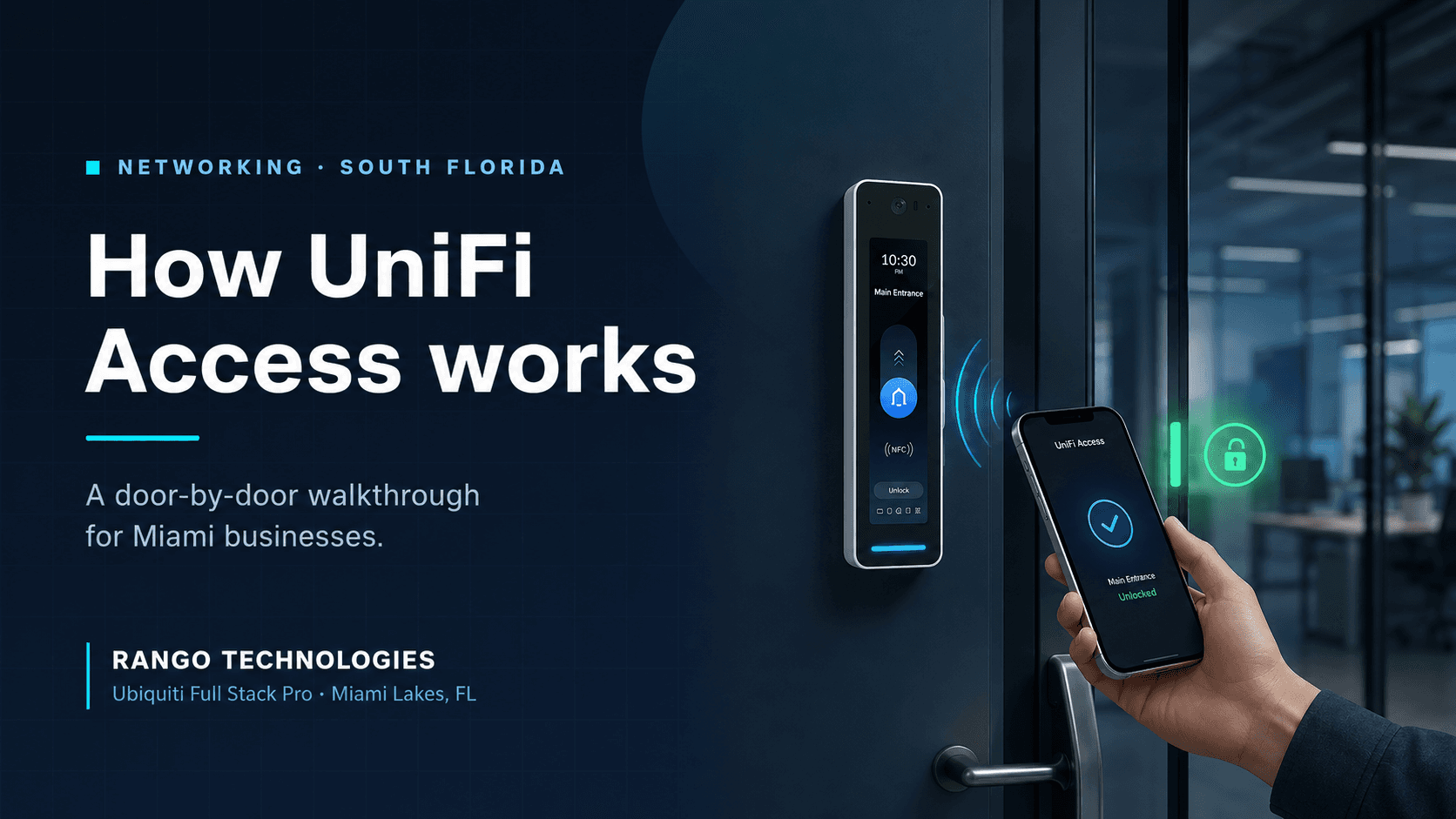
How UniFi Access Works: A Door-by-Door Walkthrough for Miami Businesses
Most business owners approve access control without ever seeing how it works. This is the walkthrough — what happens in the second after someone taps a phone on the reader, what you see in the dashboard, what happens when an employee is terminated at 4:58 PM on a Friday, and what the whole thing actually costs.
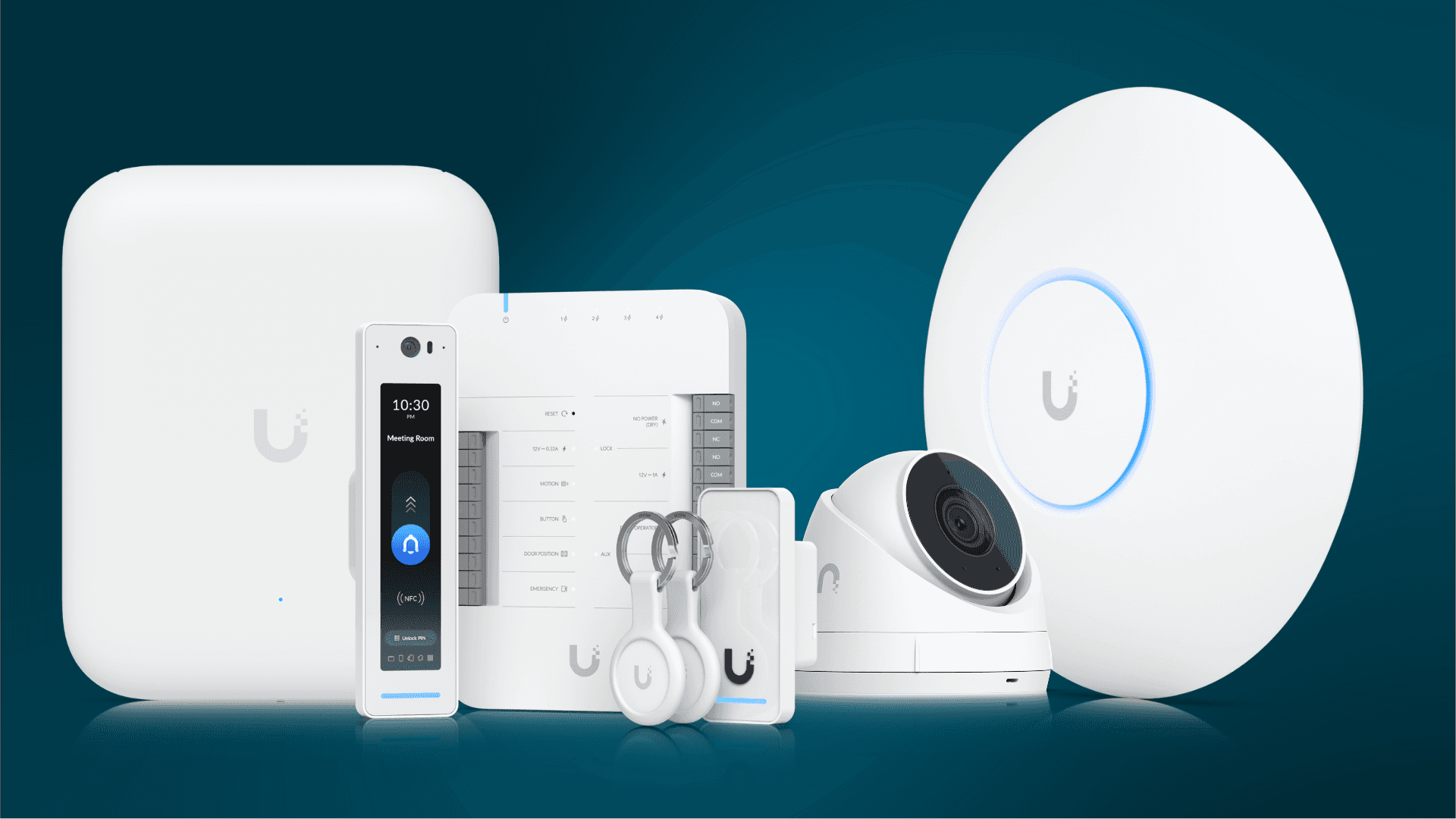
Get Better Wi-Fi, Cameras, and Access Control with UniFi
A hardening pass for a UniFi deployment that is already in: firmware, admin accounts and SSO, console exposure, VLANs for guest, IoT, POS and cameras, WPA3, and what one console does not consolidate.